Knocking down barriers
Defying paralysis, Todd Gladfelter plans to cycle 2,000 miles cross country


By Ron Devlin | rdevlin@republicanherald.com | Republican Herald
UPDATED: February 14, 2025 at 2:23 PM EST
MCKEANSBURG — Watching Todd Gladfelter work out on a stationary recumbent bike, it is hard to imagine that three years ago doctors said it was unlikely he would ever walk again.
Despite a severe spinal cord injury that has robbed him of feeling in much of his body, 64-year-old Gladfelter can get around with a walker and ride an e-assist recumbent bike.
Following a rigorous regimen of physical therapy, performed at home under the watchful eye of his wife, Cindy Ross, Gladfelter proudly points out he climbed the path to the South outlook of Hawk Mountain with only a cane for support.
Yet, conquering Hawk Mountain pales in comparison to Gladfelter’s next and most ambitious undertaking — the Great American Rail-Trail Road to Recovery Ride.
On April 26, Gladfelter will begin a 2,000-mile cross-country trek aboard a recumbent bike.
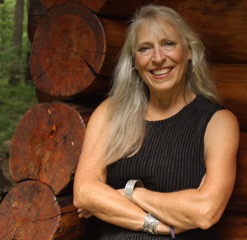
He will be accompanied by Dan Stein, a disabled former U.S. Army Ranger from Berks County, also on a recumbent bike, and Ross, 69, who will make the trip on a fat-tire mountain bike.
The goal is to ride 30 miles a day, a week at a time, spread out over about a year.
The plan calls for completing 600 miles in April and May, taking the summer off, and riding through the Midwest in the fall. The remainder of the trek is to be completed next year.
The Great American Rail-Trail runs from Washington, D.C., to the state of Washington. About 2,000 of its eventual 3,700 miles have been completed.
No easy task
Gladfelter and Ross are keenly aware of the challenges of long-distance hiking.
Holders of the coveted Triple Crown, they hiked the 2,200-mile Appalachian Trail, the 2,650-mile Pacific Crest Trail and the 3,100-mile Continental Divide Trail between Canada and Mexico.
They did the Continental Divide Trail — some say the most challenging in the U.S. — with their children, Sierra and Bryce, riding llamas. Ross chronicled the trip in her 2002 book, “Scraping Heaven: A Family’s Journey Along the Continental Divide.”
“There were times,” Gladfelter recalls, “when we didn’t see another human being for 16 days.”
That was more than 20 years ago, and Gladfelter and Ross harbor no illusions of the Great American Rail-Trail ride being easily accomplished.

“We’ve done long adventures in hiking and biking for years,” Ross says. “But with Todd’s physical state being what it is, it’s way more challenging.”
While the rail trail is flat and well marked in parts, there will be frequent stops for Gladfelter to get off the bike and stretch his legs. Bathroom breaks could be an issue, so the entourage will carry its own accommodations, should the need arise.
Ross is reaching out to local communities, hiking and biking clubs and veterans groups along the way for assistance. She is founder of River House PA, a nonprofit that uses hiking and biking to help veterans heal from trauma.
“We cannot, nor should anyone, do this monumental work alone,” Ross says. “The Great American Rail-Trail Road to Recovery Ride is about raising awareness and creating a community to redefine recovery and empower humans with mobility challenges to live without barriers.”
The road back
When he fell off a shed roof the day after Thanksgiving 2021, Todd Gladfelter fractured three vertebrae in his neck.
Though he underwent reconstructive surgery, the accident left him with significant paralysis.
While his spinal cord was not severed, Ross says, her husband lacks feeling in much of his body.
“He can walk a half-mile,” she says. “But he has to watch his feet; he can’t feel them very well.”
That is apparent in the way Stein helps Gladfelter climb aboard his recumbent bike for a workout. Guiding his feet into the bike’s stirrups, Stein secures them with velcro straps.

1 of 2
Todd Gladfelter exercises on his recumbent bike while at home Wednesday, Feb. 5, 2025. (MATTHEW PERSCHALL/MULTIMEDIA EDITOR)
“Working out on the bike helps Todd’s legs to get stronger,” Ross says. “It relaxes his muscles and relaxes him.”
Wearing a safety harness to prevent falling, Gladfelter spends a half-hour twice a day on a treadmill. Walking, Ross says, boosts his heart rate.
Stein, 35, a Robesonia resident who did tours of duty in Iraq and Afghanistan, regularly helps Gladfelter work out.

1 of 4
Todd Gladfelter (center) walks toward his treadmill at home as Dan Stein (left) and Cindy Ross (right) assist Wednesday, Feb. 5, 2025. (MATTHEW PERSCHALL/MULTIMEDIA EDITOR)
Stein’s struggle following a traumatic brain injury is recounted in Ross’ book, “Walking Toward Peace: Veterans Healing on America’s Trails,” about veterans combating PTSD and other mental health issues with the restorative power of nature.
“So much of what Todd is going through, Danny understands,” Ross said. “They really understand each other.”
With the support of Stein and others, Gladfelter has done up to 30 miles a day on his e-assist recumbent bike. He’s also completed the 63-mile Pine Creek Rail Trail near the Grand Canyon of Pennsylvania, and the 70-mile Lehigh Canal Trail from Wilkes-Barre to Easton.
Nature and recovery
Early on, Ross formulated a plan for dealing with her husband’s injury — physical activity to mend the body and nature to mend the mind.
Gladfelter was still at Encompass Health Rehabilitation Hospital in Reading when Ross would bundle him up and take him outside.
“We’ve spent our whole life knowing and understanding how good being in the natural world makes you feel,” she told him. “We’re going to figure this out, and find something good out of this horrible thing that happened to you.”
Exercising on the sunporch of the log house the couple built about 35 years ago, Gladfelter looks out on Red Mountain ridge, about a quarter-mile off Route 895.
“It’s nice to be exercising and looking out at the woods,” he says. “Sometimes, I even see deer.”
The interior of the couple’s home reflects the natural surroundings in which it rests.
Ross’ paintings of wildflowers adorn the walls and, while receiving physical therapy, Gladfelter looks up at the carving of a bald eagle perched atop the vaulted ceiling.
The accident deprived Gladfelter, a chainsaw artist who sculpted the acclaimed wild animals at Hawk Mountain’s pavilion, of the strength and agility demanded by the craft.
Miraculously, he has trained himself to carve with a tiny chain saw. Steadying his left hand with an impaired right hand, he carves life-sized owls at a basement workbench.

1 of 4
Todd Gladfelter uses a dremel to add detail to a wooden owl at his home workshop Wednesday, Feb. 5, 2025. (MATTHEW PERSCHALL/MULTIMEDIA EDITOR)
“When he’s carving, he forgets the pain,” Ross said. “He’s so much happier when he’s carving; it gives him a sense of purpose.”
Gladfelter sells his owls for $400, and the revenue offsets the expense of dealing with a spinal cord injury.
Donations in support of the Road to Recovery Ride can be made at www.gofundme.com/f/todd-gladfelter-a-road-to-recovery. Support for veterans at River House PA can be made at www.riverhousepa.wordpress.com/donations/.
Originally Published: February 14, 2025 at 1:46 PM EST
Posted in: Uncategorized
 Cindy Ross
To see the progress he has made is amazing and the draw of being in nature to heal his mind and keep you sane Cindy is a never ending challenge that you have both been able to meet each and every day. You Todd and Cindy are both inspirations to me as I recover from lower back surgery at present and from the death of my dad back in ’21. Keep on keeping on as I too am looking forward to hiking this summer but I have an electric bicycle to ride as well. Looking forward to your trail reports. JojoSmiley, fellow triple crowner
>
Wonderful! Please keep me on your distribution list. ~John 610-944-5175 mobile
John Scott nyconsnctr@aol.com
So excited for you both! Getting back out there for the long haul……..woohoo! Sue Baumann
thank you!