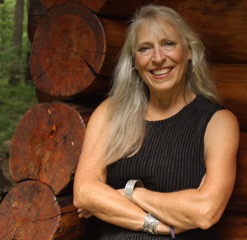
Coming Home From the Rehab Hospital (an excerpt from “The Making of a Caregiver”
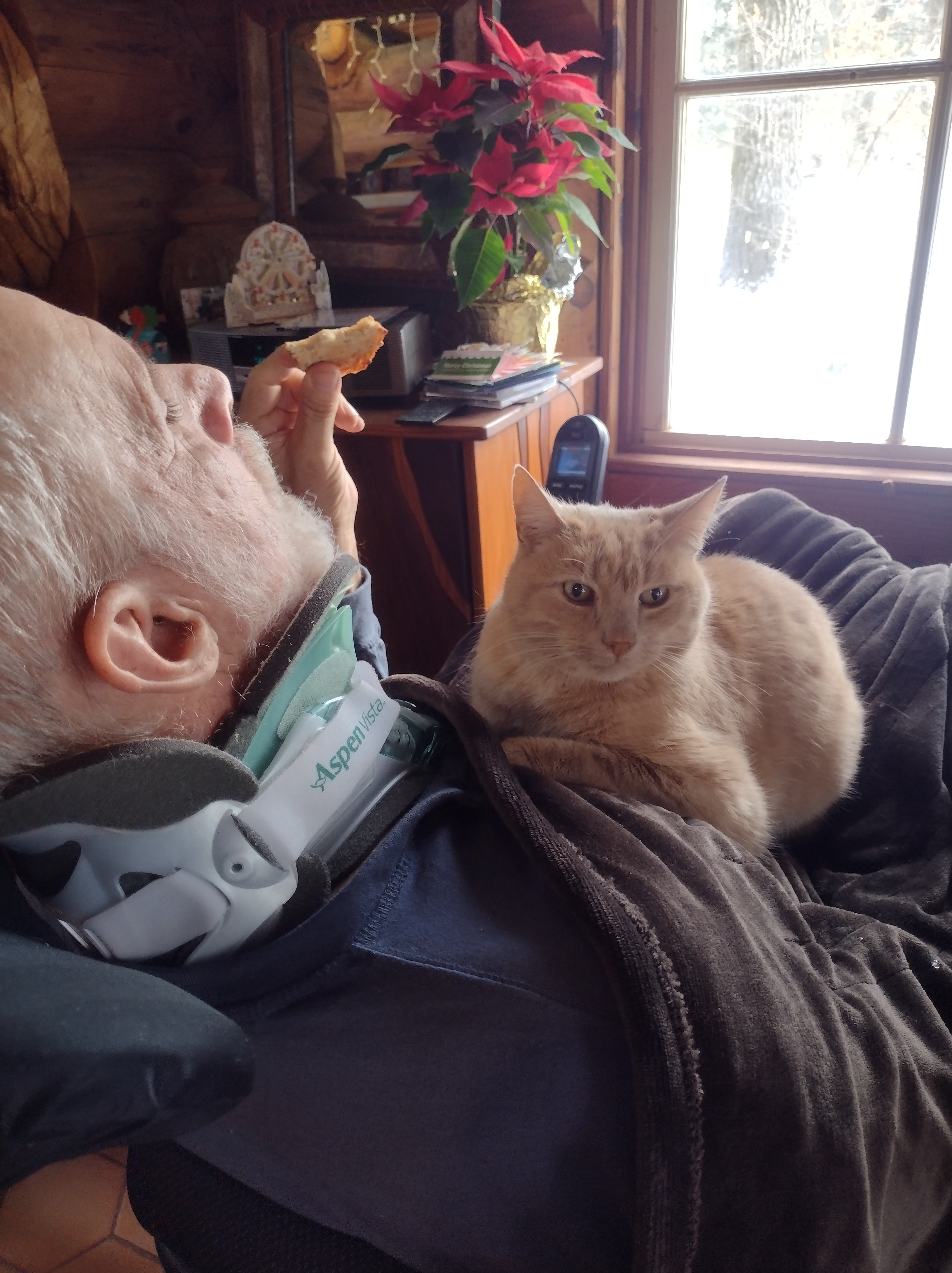
Life is very, very hard when you first come home from the rehab hospital. You think it will be great to finally get back to your safe sanctuary but here you are reminded of who you used to be and what you could do before your accident, allowing every limitation to slap you in the face. People, including myself, tell Todd that he should be grateful for what he can do, for what he has left. But truthfully, everywhere he looks, he sees things he once could do and now no longer can. To add insult to injury, he must watch me do everything.
The amount of work that must be done to take care of an SCI patient is monumental and daunting, let alone every other chore that must be done to run a household, a rural property with a garden, orchard and animals like ours. He says, “There is too much work for you. You do the work of three nurses and two homesteaders. You should just put me in a home. I’m going to be in a wheelchair the rest of my life. Half the time, I wish I were dead. It would be better for everyone.”
Todd doesn’t think we will be able to continue living here and should sell the house. I say, “I built this house too. I get a say and I’m not leaving.”
These first days at home are filled with slowness and coping and struggling and exhaustion with almost imperceptible steps forward. Todd says all he does is wait. He waits for people to help him. Waits for time to pass. Waits to get better. Waits for things to change, to heal. Bryce reminds him that while he is still, his cells are also healing and his nerves reconnecting and the inflammation resolving, so although he feels like he’s doing nothing, things are happening.
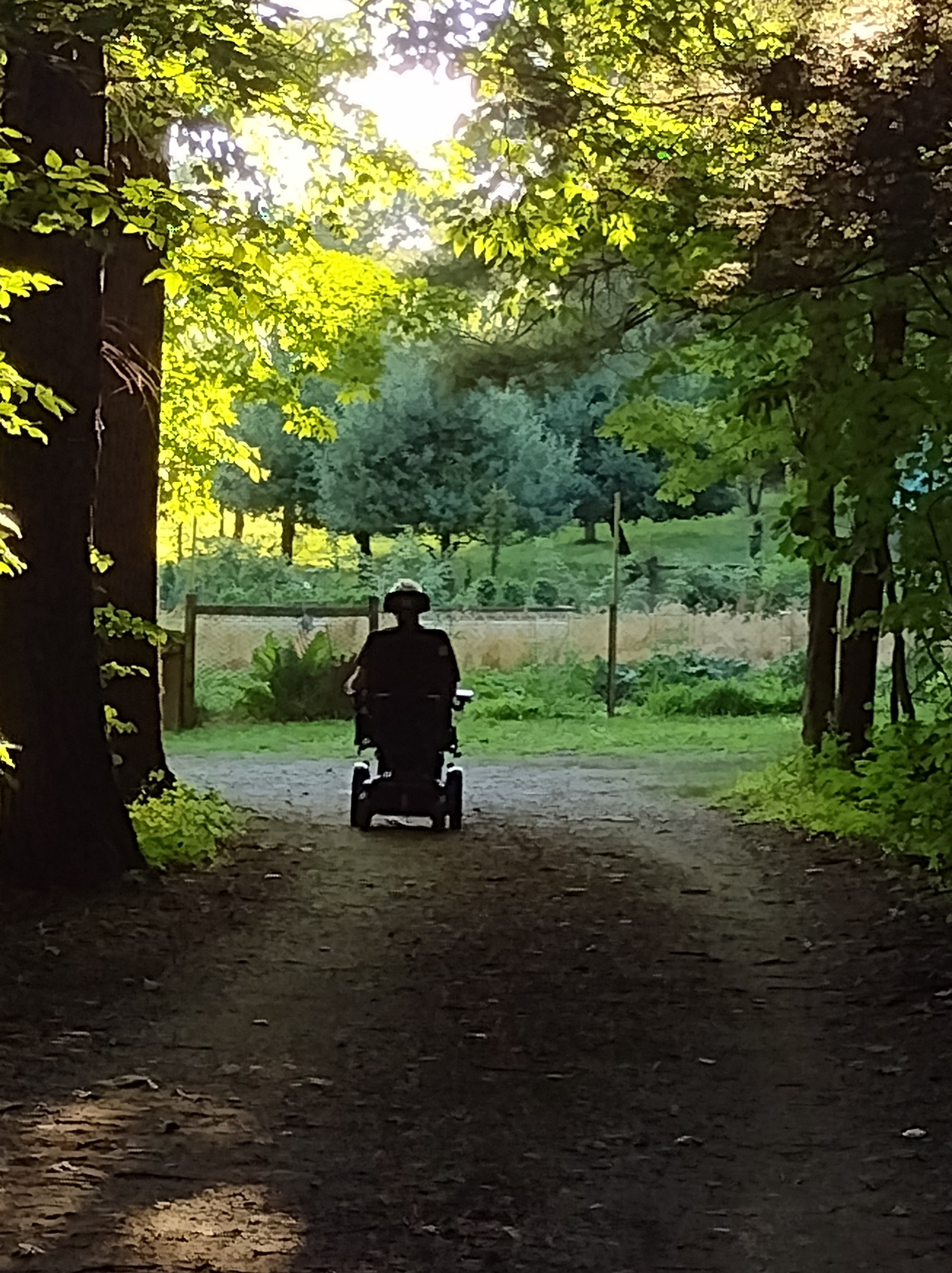
His first night home is the worse night since he was in the Intensive Care Unit (ICU) when he thought he was dying. I cath him three times in one night, which takes about an hour each. We had forced liquids all day to get a more successful bowel movement. I sleep on the floor in his room by his hospital bed and am kept awake with his moaning and crying out in pain from his terrible muscle spasms. I only sleep a few hours beginning at 4:30 am when he finally falls asleep.
As I get him ready for bed this evening, undress him and jockey him into place, propping up limbs with pillows so they don’t spasm as much, he tells me, “This is no kind of life for you.” I reply, “Well, I want to be with you, and this is your life now, so that’s where I want to be.”
Our friend Scott Birchman, a retired burn nurse, comes over the next day. He has his own PTSD (post-traumatic stress disorder) from years of doing this heartbreaking work. He comes to put up a trapeze handle over Todd’s bed to help him lift up and rearrange himself. Scott speaks very quietly to me, “Be careful about suicide.” I just look at him, wide-eyed, speechless. This is the first I am hearing this.
Wouldn’t you know it but this very night Todd says that he wishes he would have died that day. “You would grieve a little bit and then you would be fine.”
I tell him “That’s enough of that talk.”
He says, “I’m not happy.” Once he falls asleep, I sneak in and quietly tuck the dangling handle of the trapeze on top of the log it is chained to, out of his reach. I don’t know how he’d hang himself from it but I don’t even want to imagine.
According to the National Institutes of Health, “SCI is undeniably one of the most debilitating and devastating injuries a person can experience, with long-lasting consequences that impact nearly every aspect of life. It has also been observed that 34.8% of individuals with chronic SCI, experience suicidal ideation, with 17.3% having attempted suicide and a maximum of 11% resulting in fatalities.” This is startling but completely understandable. I don’t want Todd to become a statistic. Many SCIs are on depression meds, for the first few years, at least. We are not there yet but it is a tool in our toolbox I plan to use if necessary.
Soon we have to say goodbye to things in our old life, belongings that we can no longer use…like Todd’s tractor, his truck, and his stock trailer. (His chainsaws and his woodworking machinery will come later). Todd doesn’t see any reason to keep them. A vehicle will deteriorate if it just sits. Mice will chew wires, build nests. The gas that sits in the tubing will gunk up the workings. These vehicles would have to sit here for years waiting to see whether Todd can recover and get back enough to use them. Not worth it.
The livestock trailer first carried our llamas back and forth from Pennsylvania to the Rockies, while we worked for seven summers to complete the 3,100-mile Continental Divide Trail. After it was completed, Todd used the trailer to cart his carvings to shows and festivals and competitions. The other carvers always knew when Todd arrived as the trailer door was loose and loud as it rattled over bumps, compared to the other carver’s quiet enclosed trailers. The stock trailer was good for ventilation for the carvings, as the green logs did not mold, and the stock trailer certainly could handle the weight. Letting this trailer go is hard. It means he’s saying goodbye to his life as a competing carver.
Then there’s his Ford F-150 pickup with the homemade roof rack for ladders or canoes/kayaks. This vehicle took us on many adventures, including such fabulous paddling trips like the 10-day, 100-mile Wilderness Trail in the Everglades with our adult children. The truck pulled the llama stock trailer and then Todd’s chainsaw carvings. “I’ll buy you a new truck someday,” I attempt to soften the loss.
We also have to say goodbye to our kitty, Lumi, who is dying of cancer. He has an appointment with death tomorrow and Bryce just sadly dug his hole in the pet cemetery in the orchard. How much worse can it get?
The spouse of an SCI experiences loss too. This winter I miss sledding, X-country skiing, and ice skating. I miss my old husband. I miss sleeping with him and holding his hand in bed. I miss his strong arms around me, and moving with him…in a boat, on a bike, on a mountain trail. He wants to do things but he can’t move. It’s physically impossible. I look at him in that chair and can take care of him but still, I cannot imagine such incredible limits. And he is supposed to feel accomplished and grateful over the fact that he can now dig out his own boogers. I hope we can find a new way to move through the world together and have it be enough. He might be alive but there is still so much to mourn— our lives, his body. Who he once was has died in a very real sense and we must go through the stages of grief.
Posted in: Uncategorized


Worth a read. Long, but a good heartfelt message. Love John
Sent from my iPad
thank you- if you think that graph was long how about reading a book?
Couldn’t feel heartbreak any more painfully than this. As a reader, I can’t wait to see how sci life proceeds after this miserable start!!!! So naturally I’ve gotta have the book to read on…..
carolyn
it gets better!!!
Cindy,
God continue to give you strength. We read of your situation and we feel the grief and it hurts us, but for us its a short time, we turn the page and soon forget what you are going through until you post something …and we go on with our lives. But you are there 24/7. We are truly sorry you are in this situation. Hopefully Todd will turn a corner for the better soon.
JoAnne and I pray!
AZ Alex Zidock azidock@ptd.net
>
it’s getting better! very very slowly!
Cindy you are an artist with a pencil and paper …..as much as Todd is with a chainsaw. WOW
Be well my friend Bricker
love and miss you big boy- hope to see you next yr- gonna go west with the camper via michigan
Your writing invites the reader in to be part of your experience. Thank you for that.
thank you!
Beautifully written, Cindy. I can feel the pain you both experienced. This is an important book.I love you both.Patricia Klein xo
thank you sweet friend